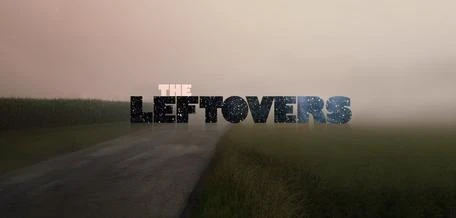
The Silence
The loudest thing in the world is the sound of everyone who's gone.

The Silence is not a character, a weapon, or a single event in The Leftovers—it is the condition the world inherits the moment two percent of its people simply stop being there. It is the absence that speaks louder than any answer: the empty chair at the dinner table, the phone that will never ring back, the sky that goes on being blue while the people who looked up at it are gone. In the lore of Maple Street and beyond, The Silence is the central mystery the entire narrative orbits around, the wound that every faction, every grief, and every desperate search for meaning is trying to fill or simply survive.
Rather than a villain or a deity, The Silence functions as the show's most persistent antagonist and its most honest question. It is the silence of God, the silence of the departed, the silence of a world that continues its ordinary Tuesday routines while something fundamentally unanswerable has just happened. Every character in The Leftovers is, in some way, a different response to that silence—some fill it with ritual, some with rage, some with a stubborn, aching hope that it means something.
- Category
- Central lore concept / thematic force
- Origin event
- The Departure
- Year of Departure
- 2006
- Global impact
- Approximately 2% of the world's population vanished simultaneously
- Day and time
- A Tuesday afternoon
- Primary setting
- Maple Street, New York (and worldwide)
- Series run
- 3 seasons (2014–2017)
Lore & Background
The Silence in The Leftovers is best understood as the residue of the Departure—the moment when, on an unremarkable Tuesday afternoon in 2006, roughly two percent of every nation, every family, every friendship simply ceased to exist. No flash of light, no alien ship, no explanation. One second a person was making coffee, driving to work, holding a child's hand; the next second there was only the chair, the car, the small empty space where a body had been. The Silence is that space. It is the quiet that follows the vanishing, the pause that never resolves into a sentence.
What makes The Silence so structurally important to the story is that it refuses to be a puzzle with a solution. The Guilty Remains, the various religious and political groups that spring up in the aftermath, and the individual families of Maple Street all try to convert the Silence into something legible—a punishment, a calling, a test, a rapture. The show, through its characters, repeatedly shows how that conversion fails or distorts. The Silence does not confirm any one theology. It does not validate the GR's black-clad processions or a mother's desperate prayer or a detective's rational need for a case file. It simply is, and the characters must live inside it.
By the final season, The Silence has become almost a character in its own right. It is the thing Tom Garvey is trying to outrun, the thing Nora Draper is trying to answer, the thing the children of Maple Street are trying to outgrow. It is also, in the show's most tender moments, the quiet between two people who love each other and do not need to explain the world to make it bearable. The Silence is not the absence of meaning; it is the space where meaning is either imposed or honestly left open, and The Leftovers trusts its audience to sit in that space without demanding a tidy resolution.
In Their Own Story
The afternoon the world went quiet, the sky over Maple Street was the same flat, indifferent blue it had been every Tuesday for the past eleven years. Mrs. Murphy was mid-sentence, telling her neighbor about the hydrangeas, and then there was no neighbor, no sentence, no second half of the thought. The hydrangeas kept blooming. The sprinkler kept ticking. Somewhere down the block, a phone was still ringing into an empty kitchen, and no one was going to answer it, and the ringing would go on and on until the battery died, and that small mechanical whining would become the loudest sound in the whole world.
Tom Garvey stood in the middle of the street with his hand still on the door of his cruiser, and the silence pressed against his eardrums like deep water. He could hear the sprinkler. He could hear a dog barking two houses down, confused, looking for a master who was no longer there. He could hear his own breathing, which felt obscenely loud, as if the rest of the world had been turned down to zero and he was the only volume left. He did not speak. He did not move. He stood in the blue afternoon light and felt the Silence settle over him like a coat that was slightly too big, and he understood, in the way you understand things before your brain catches up, that this was not a story that would end with an explanation. This was a story that would end with him still standing in the street, still breathing, still trying to figure out what to do with the rest of a Tuesday that no longer made sense.
Reader's Guide
The Silence is the foundational lore concept of The Leftovers, the HBO series created by Damon Lindelof. It refers to the condition of the world after the Departure, the event in which approximately two percent of the global population vanished without trace on a Tuesday afternoon in 2006. There is no spectacle, no explanation, no second wave. The people are simply gone, and what remains is a silence that every character in the show must navigate in their own way.
The Silence operates on multiple levels. On the personal level, it is the empty chair, the unanswered phone, the child who will never grow up. On the communal level, it is the Guilty Remains and their black-clad processions, the political and religious factions that try to legislate or theologize the absence. On the metaphysical level, it is the silence of a universe that may or may not be watching, may or may not care, and will not confirm either way.
What makes The Silence distinct as a lore element is that it is deliberately unresolvable. The show does not provide a single canonical explanation for the Departure. Instead, it explores how different people fill the silence with different stories, and how those stories shape their grief, their faith, and their relationships. The Silence is the question; every character arc is an answer that is, ultimately, incomplete.
For fans new to the series, the best way to engage with The Silence is to let it be unsettling without demanding a plot twist. The power of the concept lies in its refusal to be a mystery to be solved. It is a condition to be lived in, and the show's three seasons are, at their core, a study of what it means to keep living when the silence is the only answer you get.
Did You Know?
- The Departure, the event that creates The Silence, is established in the very first scene of the series, and the show never provides a single definitive explanation for why it happened.
- The Guilty Remains, one of the most visually iconic groups in the series, formed as a direct communal response to The Silence, channeling collective grief into ritual and black-clad processions.
- The Silence functions thematically across all three seasons, shifting from a sudden shock in Season 1 to a lived, worn-in condition by Season 3, mirroring how real grief transforms over time.
- The show's setting in the small, ordinary town of Maple Street, New York, is a deliberate choice to ground The Silence in domestic, human-scale detail rather than global spectacle.
More in Lore & History
Elsewhere in the The Leftovers universe
Spotted an error? Know more?
This is a living reference — every entry is fact-audited, and reader corrections feed straight into our audit queue. Suggest an edit · See this site's audit record