Mapleton
Where the Departure didn't just take people—it hollowed out the soul of a town.

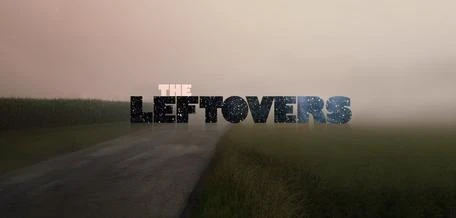
Mapleton is the fictional suburban town in Westchester County, New York, that serves as the primary setting for the first season of *The Leftovers*. It is a quiet, affluent community irrevocably shattered by the Sudden Departure, which claimed over 100 of its residents on October 14. The town becomes a microcosm of the global crisis, where grief, confusion, and fractured relationships play out against manicured lawns and empty homes. Mapleton is both a character in its own right and a stage for exploring how ordinary people cope with an inexplicable, world-altering event.
- Location
- Westchester County, New York
- Role
- Primary setting for Season 1
- Affiliation
- United States (post-Departure)
- First appears
- Season 1, Episode 1
- Status
- Active, deeply traumatized community
Lore & Background
Before October 14, Mapleton was an unremarkable upper-middle-class suburb, known for good schools, commuter trains to Manhattan, and a sense of comfortable predictability. The Sudden Departure changed everything, not just by removing over a hundred people, but by exposing the fragile social contracts that held the community together. The town became a place of empty houses, lingering memorials, and a pervasive atmosphere of suspicion and sorrow. The local police force, led by Chief Kevin Garvey, struggles to maintain order as new cults emerge and old certainties dissolve. The most visible sign of Mapleton's transformation is the presence of the Guilty Remnant, a silent, chain-smoking cult that takes up residence in abandoned homes and uses provocative tactics to force the town to remember the Departure. Their white-clad figures become a haunting fixture on street corners and in public spaces, a constant reminder of loss. The town's annual "Heroes Day" parade, meant to honor those who vanished, becomes a flashpoint for unresolved anger and grief, highlighting the deep divisions within the community. Mapleton is also home to the Garvey family, whose personal struggles mirror the town's larger crisis. Kevin Garvey's attempts to maintain normalcy for his daughter Jill and his strained relationship with his son Tommy reflect the broader failure of traditional institutions—family, faith, government—to provide comfort or answers. The town's high school, its churches, and its quiet residential streets become stages for intimate dramas of love, betrayal, and the search for meaning in a world that no longer makes sense.
In Their Own Story
The autumn wind rattled the leaves on Maple Street, but no one raked them anymore. A single white-clad figure stood motionless on the corner of Church and Main, cigarette smoke curling into the gray sky. Inside the Mapleton Diner, Kevin Garvey nursed a cup of coffee, watching the silent watcher through the window. The waitress refilled his cup without a word—they had run out of things to say months ago. Outside, a woman walked past the Guilty Remnant member without meeting her eyes, clutching her groceries like a shield. The town held its breath, as it had every day since the Departure, waiting for something—anything—to break the unbearable stillness.
Reader's Guide
Mapleton is the emotional and narrative heart of *The Leftovers*' first season, functioning as a contained universe where the global catastrophe of the Sudden Departure is experienced on an intimate, human scale. Every cracked driveway, every unlit porch, every silent meal in the diner is a testament to a community that has lost its connective tissue. The town's geography—its leafy cul-de-sacs, its emptied churches, its high school hallways echoing with the wrong kind of quiet—maps the internal landscape of grief. Here, the extraordinary becomes mundane: a silent vigil on a street corner, a father painting a room that will never be used, a parade that feels more like a funeral. To understand Mapleton is to understand that the Departure didn't end on October 14—it became the new gravity of everyday life.
Did You Know?
- Mapleton is a fictional town, but it is based on real Westchester County suburbs like Mount Kisco and Katonah, where the show's creators conducted research.
- The Guilty Remnant's headquarters in Mapleton is a repurposed former church, symbolizing the replacement of traditional faith with a new, silent doctrine.
- Many of Mapleton's exterior scenes were filmed in and around Nyack, New York, giving the town a distinct Hudson Valley feel.
- The annual Heroes Day parade was inspired by real post-9/11 commemorations, reflecting the show's interest in how communities ritualize trauma.
Premise and Global Catastrophe
The narrative foundation rests on a singular, inexplicable event known as the Sudden Departure, which occurred on October 14, 2011. In an instant, approximately 140 million people vanished from Earth, representing exactly two percent of the global population. This phenomenon shattered societal structures, causing mainstream religions to decline while giving rise to various cults seeking meaning in the chaos. Most notably, the Guilty Remnant emerged as a nihilistic group clad in white and chain-smoking, refusing to acknowledge the past or future. Simultaneously, figures like Holy Wayne appeared, claiming divinity amidst the confusion. The story initially centers on Mapleton, New York, where police chief Kevin Garvey attempts to maintain order while his family fractures under the weight of grief. His wife joins the Remnant, and his son flees to follow Wayne, leaving Kevin to navigate a town torn between denial and despair. This backdrop sets the stage for a profound exploration of how humanity copes with loss that defies all logical explanation.
Narrative Evolution Across Seasons
The series evolves significantly through its three seasons, shifting both geographically and thematically while maintaining a focus on trauma and belief. The first season establishes the conflict within Mapleton between the grieving townspeople and the disruptive Guilty Remnant. In the second season, the setting moves to Jarden, Texas, a unique location where not a single resident disappeared during the Departure. This 'miracle' town becomes a pilgrimage site, drawing in characters like Kevin's family and Nora Durst, only for peace to be shattered by new disappearances that reignite panic. The final season jumps three years ahead to 2018, splitting its focus between Jarden and Victoria, Australia. Here, the narrative delves deeper into spiritual journeys, particularly following Kevin's mentally ill father as he seeks a cryptic purpose. Throughout these shifts, the show examines how characters confront their inner demons and reevaluate their beliefs in the face of ongoing mystery.
Ensemble Cast and Character Dynamics
The series boasts an acclaimed ensemble cast that brings complex, grieving individuals to life with remarkable depth. Justin Theroux anchors the production as Kevin Garvey, a police chief struggling to hold his family together while facing personal turmoil. Carrie Coon delivers a powerful performance as Nora Durst, a widow who lost her entire nuclear family in the Departure and eventually finds an unexpected connection with Kevin. The cast also includes Christopher Eccleston as Reverend Matt Jamison, whose faith is tested as he relocates from Mapleton to Jarden. Supporting roles are equally vital, such as Amy Brenneman as Laurie Garvey, who abandons her life for the Guilty Remnant, and Liv Tyler as Meg Abbott, a woman seduced by the cult's radicalism. The interplay between these characters drives the emotional core of the show, highlighting diverse responses to loss ranging from nihilism to desperate faith.
Critical Reception and Cultural Legacy
Upon its premiere, the series received mixed reactions, with some critics finding the initial execution clunky or unsubtle. However, the show underwent a dramatic critical reevaluation during its second and third seasons, eventually earning a reputation as one of the greatest television dramas ever made. Critics lauded the writing, directing, and particularly the acting performances of Theroux and Coon for their thematic depth and emotional resonance. Max Richter's haunting musical score also received significant praise for enhancing the show's atmospheric tension. Despite maintaining average Nielsen ratings throughout its run, the series cultivated a dedicated cult following that continues to grow. Often compared favorably to Lost, another project by co-creator Damon Lindelof, The Leftovers is now celebrated for its unique ability to explore grief and faith without offering easy answers, securing its place in television history.
More in World & Setting
Elsewhere in the The Leftovers universe
Spotted an error? Know more?
This is a living reference — every entry is fact-audited, and reader corrections feed straight into our audit queue. Suggest an edit · See this site's audit record