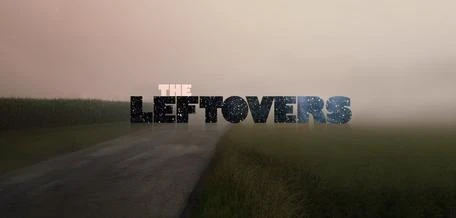
The Departure
Two percent of humanity blinked out on a Tuesday, and the rest of the world never blinked back.

The Departure is the singular, unexplained catastrophe at the heart of The Leftovers — the moment when, on an unremarkable Tuesday, roughly two percent of the world's population simply ceased to exist. No explosion, no alien craft, no divine announcement. Just absence. Their shoes, their half-finished meals, their open laptops: all remained, as if the people had evaporated mid-sentence. The event instantly fractured humanity into the departed, the left behind, and those who chose to grieve in silence and white robes.
In the HBO series (2014–2017), the Departure is less a plot device than a permanent wound. Every season orbits its aftermath: the grief counselors, the guilt-ridden survivors, the cults that bloom in the vacuum, and the quiet, aching question of whether the vanished are truly gone or simply somewhere else. It is the event that makes Mapleton, New York — and the entire world — a place where ordinary life must be rebuilt around an enormous, unanswerable hole.
- Event type
- Global mass disappearance
- Scale
- Approximately 2% of world population
- Temporal marker
- A single Tuesday (no year specified in canon)
- Physical trace left
- None — no bodies, no residue, no explanation
- Primary fictional setting
- Mapleton, New York (and worldwide)
- Notable response group
- The Guilty Remnant (GR)
- Narrative role
- Inciting event and perpetual backdrop of the entire series
Lore & Background
The Departure defies every framework humanity has for processing catastrophe. There is no forensic evidence, no pattern in demographics, no geographic clustering. A child vanishes from a playground in Lagos while her mother is still reading a storybook; a surgeon disappears mid-operation in Osaka, leaving the scalpel in his hand. The simultaneity is the most unsettling detail: it is not a wave, not a signal propagating across the planet. It is, in the words of the characters who try to make sense of it, a single global exhale. The departed do not leave a note, a body, a tear in the fabric of space. They are simply not there, and the chair they were sitting in is still warm.
The immediate aftermath is chaos: governments scramble, religions fracture, social media floods with desperate calls for the missing. But within weeks, a quieter, stranger phenomenon emerges. The Guilty Remnant — individuals who shave their heads to the scalp, don plain white clothing, and sit in absolute silence — begin appearing in public spaces, in offices, in homes. They do not speak. They do not eat. They simply sit, and when you look at them, you feel the weight of a grief so total it has calcified into a kind of holy stillness. They become the series' most haunting symbol: proof that some people do not just lose the departed; they lose the capacity to continue living as if the world is still whole.
Over the three seasons, the Departure evolves from a news event into a metaphysical condition. Characters argue about whether the vanished are dead, whether God is dead, whether the event was a punishment, a gift, or an accident. The show never resolves the question, and that refusal to resolve is its deepest statement. The Departure is not a mystery to be solved; it is a wound that changes the shape of every conversation, every relationship, every Tuesday that follows.
In Their Own Story
The coffee in the mug was still warm. That was the thing Kevin Garvey kept coming back to, the way his brain latched onto the small, stupid, domestic details because the larger ones were too large to hold. Laurie's mug. The little chipped one with the faded cartoon cat. Still warm. The chair pushed back from the kitchen table, the way she'd pushed it when she stood up to go get the mail. The mail, which never came back. He stood in the doorway of the Mapleton kitchen at 7:42 on a Tuesday morning, and the house was so quiet it had a texture, a pressure against his eardrums, like the silence itself was a living thing pressing its face against his skin. Jill's bedroom door was open. Her backpack was on the floor. Her shoes were by the door, laces still tied, as if she'd just kicked them off and was about to put them back on. He picked one up. It was still warm. He set it back down. He did not pick it up again. Outside, the siren wailed somewhere down Route 11, and the sky was the same flat, ordinary blue it had been the day before, and the day before that, and the day before the world broke open and two percent of everything simply walked out the door and never came back.
Reader's Guide
The Departure is the foundational event of The Leftovers, the HBO drama created by Damon Lindelof and adapted from Tom Perrotta's 2006 novel. On an unspecified Tuesday, roughly two percent of the global population vanishes without trace. No bodies. No explanation. No pattern. The event is instantaneous and worldwide, and it shatters the social, religious, and psychological fabric of every community it touches.
The series is set primarily in the fictional town of Mapleton, New York, and follows several families and institutions in the months and years that follow. Police Chief Kevin Garvey must navigate his role as a leader while his own wife and daughter are among the departed. Grief counselor Matt Jamison grapples with the fact that his profession has suddenly become the world's most urgent need. Nora Durst, a mother whose son vanished, is drawn into the orbit of the Guilty Remnant, a silent, white-robed group who sit in public spaces and refuse to speak, embodying a grief so absolute it looks like a kind of death of the self.
What makes the Departure distinct in the landscape of speculative fiction is its refusal to provide an answer. The show is not about aliens, or a simulation, or a divine test. It is about what it means to be left behind when the universe offers no reason. The Departure is the question; the characters' responses are the only story that matters.
Did You Know?
- The Guilty Remnant members shave their heads and wear white not as a costume but as a deliberate erasure of individual identity — they are meant to look like a single, faceless collective, and they sit in absolute silenc
- The Departure is deliberately unexplained across all three seasons of the HBO series. The show never reveals what happened, where the departed went, or why. This is a structural choice, not a plot gap.
- The event is described as happening on a Tuesday, a detail that underscores its banality. There is no storm, no eclipse, no news alert. It is a regular weekday, which makes the absence feel more violent, not less.
- The Leftovers is based on Tom Perrotta's 2006 novel of the same name, but the HBO series (2014–2017) significantly expands the mythology, adds new characters and subplots, and restructures the narrative across three seas
More in Lore & History
Elsewhere in the The Leftovers universe
Spotted an error? Know more?
This is a living reference — every entry is fact-audited, and reader corrections feed straight into our audit queue. Suggest an edit · See this site's audit record