Damon Lindelof
The mind behind the mystery: the storyteller who made absence feel like the loudest sound in the room.

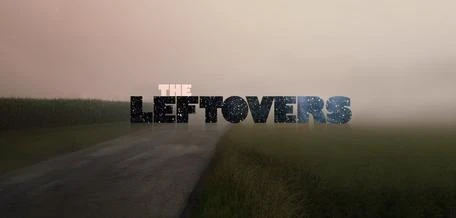
Damon Lindelof is the creator, writer, and showrunner of HBO's The Leftovers (2014–2017), the three-season drama exploring the aftermath of a global event in which roughly two percent of the world's population vanishes without a trace. As the primary creative force behind the series, he adapted Tom Perrotta's 2011 novel into a sprawling, spiritually searching television narrative that became one of the most discussed prestige dramas of the 2010s.
In this fan encyclopedia, he is listed not as a fictional inhabitant of the Leftovers world but as its architect—the real-world storyteller whose vision shaped every character, every unanswered question, and every quiet kitchen-table conversation that defines the show's emotional core.
- Role
- Creator, Writer, Executive Producer, Showrunner
- Affiliation
- HBO / Bad Robot
- Source material
- Tom Perrotta's novel The Leftovers (2011)
- Notable prior work
- Co-creator of Lost (ABC, 2004–2010)
- Notable later work
- Creator of Watchmen (HBO, 2019)
- Status
- Living (real-world figure)
Lore & Background
Lindelof's approach to The Leftovers is best understood through the show's central conceit: a world that has lost something it cannot name, quantify, or grieve in any conventional way. Rather than building a thriller around the disappearance itself, he structured the narrative around the people who remain—how their faith fractures, how their routines become rituals, how a small town in Massachusetts becomes a microcosm for every community trying to keep functioning while the ground beneath them has quietly shifted. The result is a show that treats grief not as a plot device but as a permanent weather system.
His background on Lost, where layered mythology and ensemble storytelling were the signature, clearly informs The Leftovers' structure: multiple interlocking character arcs, a recurring motif of circles and cycles, and a narrative that resists neat resolution. Yet where Lost leaned into spectacle and cliffhangers, Lindelof turned the dial toward interiority. The most important scenes in The Leftovers often involve two people sitting in a kitchen, saying almost nothing, and meaning everything. That restraint is a deliberate creative philosophy.
The show's third season, which moved the ensemble to a fictional town called Guilt, New York, demonstrated Lindelof's willingness to escalate tone and theme without losing the grounded, character-first sensibility that made the first two seasons resonate. The final episode's choice to end on a note of quiet, ambiguous hope rather than a definitive answer became one of the most discussed conclusions in recent HBO history and cemented the series' reputation as a work that trusts its audience to sit with uncertainty.
In Their Own Story
The parking lot behind the church in Guilt, New York, is empty at 6 a.m. The sky is the flat, pewter grey that always seems to hang over this town. A single headlight cuts through the mist, and a car pulls in slowly, tires whispering on wet asphalt. The driver doesn't get out. He just sits there, engine ticking, watching the steeple through the rain-streaked windshield. Inside, the radio is off. The silence is the point. He's been driving for three hours, and the only thing he's said out loud the whole trip was a name he can't quite remember why he was saying it. The church bell will ring in four minutes. It always rings. He doesn't know if he'll get out of the car. He doesn't know if that matters. The mist curls around the taillights, and for a moment the whole world is just breath and rust and the faint, persistent hum of a question nobody is going to answer.
Reader's Guide
Damon Lindelof is not a character within the fictional world of The Leftovers. He is the real-world creator and showrunner who conceived, wrote, and guided the series across its three seasons. His role is that of author and architect: every plot thread, every character's interior conflict, every deliberate non-resolution traces back to his creative decisions.
His arc as a showrunner is visible in the series' evolution. Season one introduces the world of the Departure and plants the seeds of faith, doubt, and community. Season two deepens the ensemble, introduces the Guilt storyline, and pushes the narrative toward its thematic climax. Season three is the most experimental, relocating the cast and committing fully to the show's central question: what do you do when the answer doesn't come?
His defining creative skill is emotional restraint. Where many prestige dramas escalate through spectacle, Lindelof's signature is the withheld line, the paused beat, the scene that ends before the catharsis lands. He builds tension not through what happens but through what almost happens and then doesn't.
Defining moments for fans include the show's decision to center on ordinary people processing an extraordinary event, the introduction of the Guilt as a living, breathing sub-plot, and the final episode's refusal to provide the closure audiences often expect from serialized television. For fans, Lindelof represents a particular philosophy of storytelling: that the most honest stories are the ones that leave a door slightly ajar.
Did You Know?
- The Leftovers is based on Tom Perrotta's 2011 novel, but Lindelof's television adaptation diverges significantly in structure, tone, and several character fates, making the show a distinct work rather than a direct adapt
- Lindelof's prior experience co-creating Lost—where layered mythology and ensemble arcs were the hallmark—clearly shaped The Leftovers' multi-threaded narrative, though the latter trades spectacle for quiet, interior dram
- The show's title and central event are deliberately ambiguous by design; Lindelof has discussed in interviews how the series is less about the disappearance itself and more about the meaning people construct in the absen
- After The Leftovers concluded, Lindelof went on to create and write the HBO adaptation of Watchmen (2019), again demonstrating his preference for reimagining existing source material through a deeply personal, character-
More in Characters
Elsewhere in the The Leftovers universe
Spotted an error? Know more?
This is a living reference — every entry is fact-audited, and reader corrections feed straight into our audit queue. Suggest an edit · See this site's audit record