The New World Revelation
The world ends, a new one begins, and it is exactly the same world as before.

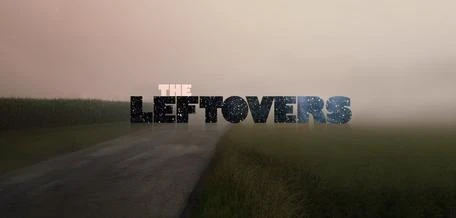
The New World Revelation is the Season 3 mythological capstone of The Leftovers, the HBO drama created by Damon Lindelof and loosely adapted from Tom Perrotta's 2006 novel. It is the show's ultimate answer to the question of 'why' behind the Departure—the simultaneous, unexplained vanishing of a small fraction of the global population that upends the lives of everyone in Maplewood, New Jersey. Rather than offering a singular cause or a divine explanation, the revelation reframes the Departure as one iteration of an endless, repeating cycle: a 'new world' is born after each vanishing, yet it is, in every meaningful way, the same world as the one that came before, populated by the same faces, the same griefs, and the same unresolved patterns.
This revelation recontextualizes every character's journey across three seasons. Kevin Garvey's search for meaning, Nora's descent into the Guilty Remnant, and the Group of Thirteen's theological debates all become one more pass through a loop that has no beginning and no end. It is, in the show's own terms, both the most devastating and the most liberating truth the series offers: the pain is not a puzzle to be solved, but a rhythm to be endured.
- Subject
- The New World Revelation (Season 3 mythological reveal)
- Series
- The Leftovers (HBO, 3 seasons)
- Creator
- Damon Lindelof
- Source material
- Tom Perrotta's 2006 novel of the same name
- Primary setting
- Maplewood, New Jersey
- Core theme
- Cyclical departure and the recurrence of loss
- Narrative function
- Series-ending mythological reframe
Lore & Background
The mythology of The Leftovers operates on a principle that resists neat theological packaging. Across three seasons, the show layers competing interpretations—the Guilty Remnant's silent, self-mutilating devotion; the Group of Thirteen's structured, almost corporate faith; Kevin Garvey's stubborn, grief-fueled insistence that there must be a 'why'—without ever confirming any single one. The New World Revelation arrives in the final stretch of Season 3 and quietly dismantles all of them. The Departure is not a singular, historic catastrophe. It is a recurring event, a kind of cosmic reset, that has happened before and will happen again. The 'new world' that emerges in its aftermath is not a redemption or a reward; it is a repetition. The same people, the same small-town dynamics, the same aching questions, simply re-staged.
This idea carries a specific emotional weight for the show's characters. For Nora Durst, whose entire identity is built around the loss of her daughter Michaela, the revelation that the cycle will turn again means her grief is not a wound that will eventually scar over—it is a condition. For Kevin Garvey, who spent the series trying to impose order and narrative on chaos, the revelation is a kind of mercy: he does not need to find the answer because the question itself is the answer. The world does not owe them an explanation. It only owes them the next round.
The show never presents this cycle as mechanical or cold. The vignettes in the final episodes—families gathering, a child's laughter, a quiet argument over dinner—carry the same warmth and specificity as every other scene in the series. The 'new world' is not a simulation or a void. It is lived, felt, and grieved over with full human weight. The revelation is less a plot twist than a tonal shift: the camera lingers, the music softens, and the audience is invited to sit in the knowledge that this is not the end of the story. It is the beginning of the same story again.
In Their Own Story
The kitchen table at the Garvey house is set for four, though only two chairs are occupied. Kevin stirs coffee that has gone cold twice. Across from him, Nora peels an orange in long, deliberate strips, the citrus scent filling the quiet. Outside, the maple leaves are turning the same shade of rust they did last October, the one before that, the one before that. A neighbor's dog barks. A car passes on the street, headlights sweeping the window in a slow arc. Kevin watches the light cross the wall and thinks, without surprise, that the light will cross the wall again. He does not say this. Nora does not ask. They finish their coffee, they wash the two mugs, and the evening settles over Maplewood the way it always does—gently, completely, and with the faint, unshakeable sense that tomorrow will be a new day in a world that is, in every way that matters, the very same world as yesterday.
Reader's Guide
The New World Revelation is not a single event but a slow accumulation of clues across Season 3 that culminate in the series finale. Early in the season, Damon Lindelof seeds the idea through recurring visual motifs: the same locations shown from slightly different angles, characters in new clothes but with the same mannerisms, and a persistent sense of déjà vu that the show never explicitly names until the final stretch.
The key characters driving this arc are Kevin Garvey, who has spent two seasons building a theological framework for the Departure, and Nora Durst, whose relationship with the Guilty Remnant has become a kind of living theology. Both are confronted, in the closing episodes, with the implication that their entire struggle—Kevin's search for a rational 'why,' Nora's embrace of a faith that demands silence—was one iteration of a pattern that has no author and no endpoint.
The impact is structural as much as emotional. The show refuses to let the audience resolve into catharsis. Instead, the final scenes mirror the opening scenes of Season 1 with deliberate, almost uncomfortable precision: the same town, the same faces, the same questions posed in the same quiet, aching register. The revelation redefines the series' genre. It is no longer a mystery about what happened. It is a meditation on the fact that something will always be happening, and the only honest response is to keep living inside it, one morning at a time.
Did You Know?
- The New World Revelation deliberately withholds a definitive 'why' for the Departure, a choice Lindelof has described in interviews as central to the show's philosophy: the absence of an answer is itself the answer.
- The Guilty Remnant's practice of cutting out their tongues and wearing white is presented in the show as one possible response to the Departure, but the Season 3 mythology suggests their silence may be less a theological
- The show's final episode is structured to mirror its pilot in visual composition and emotional tone, reinforcing the idea that the 'new world' is a re-staging rather than a true beginning.
- Tom Perrotta's original novel ends on a more ambiguous, less explicitly cyclical note than the television series; Lindelof's adaptation leans into the repeating-world concept as its central mythological thesis.
More in Story & Timeline
Elsewhere in the The Leftovers universe
Spotted an error? Know more?
This is a living reference — every entry is fact-audited, and reader corrections feed straight into our audit queue. Suggest an edit · See this site's audit record