The Sudden Departure
Two percent of the world blinked out, and no one ever learned why.

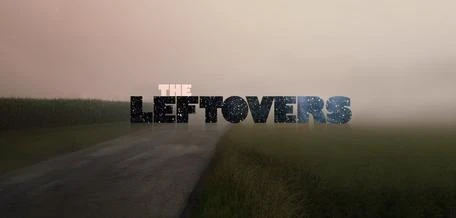
The Sudden Departure is the inciting cataclysm of The Leftovers, the HBO drama created by Damon Lindelof and adapted from Tom Perrotta's 2004 novel. On an unremarkable Tuesday, roughly two percent of the world's population simply ceases to exist—no bodies, no residue, no warning, no explanation. They are gone, and the people left behind must confront the unbearable silence where their loved ones used to be.
Rather than treating the event as a mystery to be solved, the narrative treats it as an irreversible wound. The Departure becomes the lens through which every character's grief, faith, guilt, and search for meaning is magnified. It is less a plot device than a permanent condition of the world the story inhabits.
- Event type
- Unexplained mass disappearance
- Scale
- Approximately 2% of the global population
- Setting focus
- Maple Street, upstate New York (small-town America)
- First depicted
- Season 1, Episode 1
- Key group formed
- The Guilty Remains (GR)
- Narrative resolution
- Never explained; treated as an unanswerable fact
Lore & Background
In the world of The Leftovers, the Departure defies every framework humans use to make sense of loss. There is no body to lay to rest, no cause to assign blame to, no enemy to rage at. The vanished are simply absent, as though they were never there. This ontological void—grief without a corpse, mourning without a reason—becomes the central psychological wound of the story. Characters oscillate between denial, spiritual crisis, and a desperate need to ritualize the unexplainable.
The community response fractures along predictable and unpredictable lines. Some double down on existing faith, interpreting the event as divine judgment or rapture. Others, like the members of the Guilty Remains, construct a theology of collective guilt, insisting that the living somehow caused the Departure through their sins or indifference. Still others, like the police chief of Maple Street, refuse to let the event override the mundane obligations of daily life, insisting that the world still requires traffic tickets and school meetings even when the sky has cracked open.
What makes the Departure resonate so powerfully in the narrative is its refusal to be a puzzle. The show and novel resist the urge to provide a sci-fi or supernatural explanation. The event's meaning is not in its cause but in what it does to the people who remain—how it strips away the comfortable narratives people use to explain suffering and forces them to sit, naked and uncomprehending, in the void.
In Their Own Story
The fluorescent lights in the Maple Street elementary school hum their flat, institutional tune. Nora stands at the front of Room 12, marker cap still in her hand, a half-finished sentence about the water cycle dangling from the whiteboard. Twenty-three small faces stare back at her. Twenty-three. She counts them twice, three times, because the number is wrong and she cannot yet say how wrong. The silence in the room is not the silence of children being quiet. It is the silence of children who do not understand why the empty desks are still warm, why the backpacks are still zipped, why the juice boxes are still half-full and already going flat. Outside, a neighbor's car sits in the driveway with the engine still ticking, the radio murmuring a country station to an empty back seat. Nora sets the marker down. She does not cry. She has not yet been allowed to cry. She will be allowed later, in the parking lot, in the church basement, in the dark of a hotel room in a city she cannot name. But not now. Now she simply stands, and the water cycle waits on the board, and the world is two percent smaller, and no one has told her what to do with the rest.
Reader's Guide
The Departure is established in the first moments of the series and never revisited as a mystery. Its impact ripples outward across three seasons.
In Season 1, Maple Street reorganizes around the absence. Kevin Garvey, the town's police chief, anchors himself in procedural duty—arrests, court dates, school safety inspections—because the alternative is to look at the empty chair at his dinner table and shatter. His wife Jill, a recovering addict, spirals into a spiritual crisis that pulls her toward a new faith community. Nora, a schoolteacher whose husband and two children have vanished, becomes a hollow vessel for the town's collective guilt. Laurie, a young woman already on the margins, joins the Guilty Remains, a support group that meets in a church basement and insists the living are to blame.
Season 2 widens the lens. The GR's theology of guilt hardens into something messianic under a new leader. Kevin's marriage to Jill fractures under the weight of diverging grief. A parallel storyline in a small Texas town explores how a different community metabolizes the same event through a cult of the vanished.
Season 3 draws the threads toward a kind of resolution that is not an answer. Characters must decide whether to keep the Departure as the organizing wound of their lives or to let it become one layer of a larger, more ambiguous story. The event remains unexplained. The story's final act is not about what happened, but about what the living choose to build in the space where the gone used to be.
Did You Know?
- The Departure is never given a specific calendar date in the show; it simply happens on a Tuesday, emphasizing its banality and the fact that no one was prepared because no one could have been.
- The Guilty Remains (GR) is not a religious organization in the traditional sense; it is a self-appointed tribunal of guilt, and its members genuinely believe their collective sins triggered the event.
- The show deliberately avoids showing the moment of vanishing from the perspective of those who disappear. We only ever see the aftermath—the empty chair, the still-warm desk, the car with the engine running—keeping the e
- Tom Perrotta's 2004 novel, on which the series is based, also leaves the cause of the Departure unexplained, and Lindelof's adaptation preserves that refusal to provide an answer.
More in Story & Timeline
Elsewhere in the The Leftovers universe
Spotted an error? Know more?
This is a living reference — every entry is fact-audited, and reader corrections feed straight into our audit queue. Suggest an edit · See this site's audit record