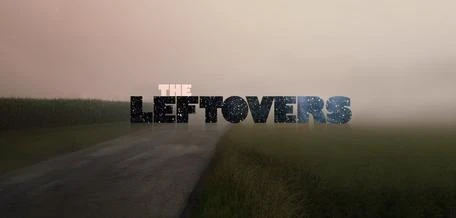
The Sudden Departure Memorial
Where the living build altars for people who left no body, no trace, no explanation.

The Sudden Departure Memorial represents the collective space of remembrance in the world of The Leftovers—the physical and ritual sites where the communities of Mapleton, New York, and beyond gather to honor the roughly 140 million people who simply ceased to exist in a single, unexplained instant. It is not one fixed monument but a living practice: a town square draped in candles, a bench left empty, a name spoken aloud on an anniversary. In a world where the dead cannot be buried because they were never found, the memorial becomes the only anchor between the living and the vanished.
Within the HBO series (2014–2017), these memorial spaces function as the emotional and thematic spine of the story. They are where grief is performed publicly, where the Guilty Remnant's silence contrasts with the noisy, desperate rituals of those who still speak, and where characters like Sheriff Kevin Garvey and Reverend Nora Durst confront the unbearable question of whether the departed are truly gone or merely elsewhere.
- Setting
- Mapleton, New York (primary); global implications
- Event commemorated
- The Sudden Departure (approximately 2% of world population vanished)
- Franchise
- The Leftovers (HBO, 2014–2017)
- Creator
- Damon Lindelof (series); Tom Perrotta (source novel)
- Primary characters connected
- Kevin Garvey, Nora Durst, Matt Jammer, the Guilty Remnant
- Narrative role
- Central site of grief, ritual, and community fracture
Lore & Background
In the aftermath of the Sudden Departure, the absence of a corpse inverts every funeral tradition humanity has ever devised. There is no casket to lower, no grave to mark, no photograph to frame with flowers. The memorial, then, must be constructed entirely from words, gestures, and shared silence. In Mapleton, this takes the form of public gatherings in open spaces—parks, town squares, churchyards—where neighbors light candles, read names from lists, and sit in rows of folding chairs under fluorescent light. The act of remembering becomes the act of mourning, and the memorial space becomes a stage on which every community performs its own private theology of loss.
The Guilty Remnant complicates this ritual architecture. By shaving their heads, dressing in white, and refusing all sustenance and speech, the GR reject the very premise that the departed can or should be memorialized. Their presence at or near memorial gatherings creates a charged silence that presses against the noise of the grieving. For characters like Kevin Garvey, the memorial is a civic duty he enforces; for Nora Durst, it is a wound that will not close; for Matt Jammer, it is a door that might, impossibly, still be open.
Across the three seasons, the memorial spaces evolve. What begins as a single, shared public ritual fractures into competing observances—some loud and liturgical, some secret and obsessive, some so private they exist only in a single person's memory. The memorial is never finished. It is rebuilt, argued over, abandoned, and rebuilt again, mirroring the way the characters themselves are continuously reconstituted by grief.
In Their Own Story
The parking lot behind the Mapleton fire station has been cleared of cars. Folding chairs face a bare stretch of asphalt where a banner has been hand-lettered in black marker: names, hundreds of them, spilling off the edges. Nora stands at the back, arms crossed, jaw tight. She does not light a candle. She never does. Around her, the hum of a hundred small voices murmuring prayers in three languages fills the October air. A child tugs at a woman's coat, asking why the sky is the wrong color. The woman does not answer. Somewhere beyond the chairs, a GR member in white sits perfectly still on a curb, watching the flames lick the wicks of a hundred tiny candles. He does not blink. Nora watches him watching. The wind takes the names off the banner, one by one, and the evening swallows them whole.
Reader's Guide
The Sudden Departure Memorial is not a single building or monument in The Leftovers. It is the recurring, evolving space of public and private remembrance that the show's characters construct in the wake of the vanishing. In Mapleton, it manifests as town-square gatherings, churchyard vigils, and impromptu candlelightings in parking lots and schoolyards. Its role in the narrative is foundational: it is the physical expression of the show's central question—what do you do when the dead leave no evidence they were ever here?
The memorial spaces matter because they are where the show's major conflicts crystallize. Kevin Garvey uses them as civic instruments to hold a fractured town together. Nora Durst's relationship to them oscillates between fierce participation and bitter rejection. Matt Jammer's entire arc is, in part, a refusal to let the memorial be a period at the end of a sentence. The Guilty Remnant, by their very presence and silence, turn every memorial into a contested site.
For the viewer, these spaces are the emotional gravity well of the series. They are where the abstract horror of the Departure becomes tangible, where you see grief not as a private feeling but as a communal architecture that must be built, maintained, and sometimes demolished.
Did You Know?
- Because the departed left no bodies, the show's memorial practices deliberately invert traditional funeral rituals—there is no casket, no grave, no closing of eyes—making the act of remembrance entirely verbal and perfor
- The Guilty Remnant's refusal to speak, eat, or drink means they are the only group in the show that actively rejects the memorial as a meaningful act, creating a philosophical counterpoint to every other character's grie
- The memorial spaces in the show change character across the three seasons, shifting from communal public rituals to increasingly private, obsessive, and sometimes violent expressions of loss, tracking the characters' dee
- The show's source material, Tom Perrotta's 2004 novel, also centers on the Sudden Departure and its aftermath, though the HBO adaptation significantly expanded the scope, added new characters, and restructured the narrat
More in World & Setting
Elsewhere in the The Leftovers universe
Spotted an error? Know more?
This is a living reference — every entry is fact-audited, and reader corrections feed straight into our audit queue. Suggest an edit · See this site's audit record