Kersey, New York
A small town where absence becomes the loudest sound in the room.

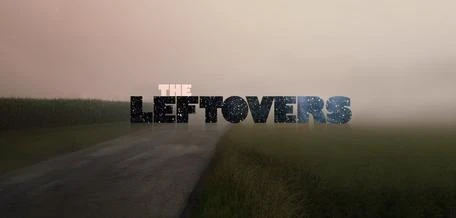
Kersey, New York is the fictional small town in upstate New York that anchors the entire narrative of The Leftovers. It is the community where the Departure—the sudden vanishing of roughly two percent of the world's population—lands not as a global statistic but as a neighbor, a teacher, a child, a friend. Every street, every church pew, every police dispatch in Kersey becomes a site of grief, guilt, and the desperate human need to make the unexplainable mean something.
The town functions as both a character and a lens. Through its residents—officers, parents, clergy, teenagers—the series explores how a tight-knit community fractures, reassembles, and reinvents itself in the shadow of an event that defies every framework it once relied on. Kersey is where the story's intimate, grounded drama lives, in contrast to the wider, stranger threads that pull outward from its borders.
- Location
- Fictional small town, upstate New York
- Role
- Primary setting of The Leftovers (all three seasons)
- Key institutions
- Kersey Police Department, local church, high school
- Central event
- The Departure (global disappearance of ~2% of humanity)
- First appears
- Season 1, Episode 1
- Notable residents
- Nora Durst, Kevin Garvey, Matt Jammer
Lore & Background
Before the Departure, Kersey was the kind of place where everyone knew everyone's name and the biggest news was a pothole on the main road. It had a police station with a handful of officers, a church that anchored Sunday life, a high school where the same faces cycled through the hallways year after year, and a grocery store where the regulars traded small talk over the produce. It was unremarkable in the way that most American small towns are unremarkable—safe, routine, quietly provincial.
The Departure shattered that routine in an instant. People simply stopped being there. In Kersey, that meant a missing colleague, a missing student, a missing parent, a missing friend. The town's institutions—police, church, school—immediately became the sites where the community tried to process what had happened, and where it increasingly failed. The police station, once a place of order, became a place of unanswered questions. The church, once a place of comfort, became a place of theological crisis and, eventually, a gathering point for a group that called itself Guilt and Shame, seeking absolution for a sin they could not name.
Over the course of the series, Kersey becomes a palimpsest of coping strategies: denial, rage, ritual, reinvention. The town's physical spaces stay largely the same—same streets, same buildings—but the emotional architecture inside them is rebuilt again and again. The show uses Kersey's smallness to make the global event feel local, to make the audience feel the weight of a single empty chair at a single dinner table.
In Their Own Story
The fluorescent lights in the Kersey Police Department hummed their low, indifferent note. Nora stood at the counter, coffee going cold in a paper cup, watching the parking lot through the glass. Three cars. Three. The lot held twelve. She counted them the way she counted everything now—twice, then a third time, to make sure the number hadn't changed while she blinked. Outside, the October light was going amber and thin, the kind of light that made the empty houses on Birch Street look like they were holding their breath. A siren wailed somewhere past the church, past the school, past the place where the world had simply… stopped. She set the cup down. Picked it up. Set it down again. The hum of the lights filled the silence where a conversation should have been.
Reader's Guide
Kersey is the fictional small town in upstate New York that serves as the narrative and emotional home of The Leftovers. It is not a sprawling metropolis or a remote wilderness; it is a compact, recognizable community—police station, church, high school, grocery store, residential streets—where every resident is connected to every other by shared history and shared loss.
Its role in the story is foundational. The Departure, the inciting event of the entire series, is experienced first and most intimately through Kersey's residents. The town's institutions become the stages on which grief, guilt, faith, and denial play out in real time. The police station is where order meets the unorderable. The church is where belief collides with evidence. The school is where the next generation inherits a world already broken.
Kersey matters because it is the show's grounding mechanism. The Leftovers deals with cosmic, almost mythic events, but it does so through the lens of a town where the mail still arrives, the leaves still change color, and the coffee still goes cold. That contrast—between the enormity of the Departure and the smallness of a Tuesday afternoon in a New York suburb—is what gives the series its distinctive, aching tone. Kersey is where the audience lives, and where the story's emotional weight is felt most directly.
Did You Know?
- Kersey is entirely fictional; the series was filmed across various real locations in and around New York, but the town itself does not exist on any map.
- The town's small size is a deliberate narrative choice: by limiting the cast to a single community, the show makes a global event feel like a neighborhood tragedy.
- The Guilt and Shame group, a recurring collective in the series, meets within Kersey and uses the town's church as a central gathering space.
- Kersey's police department serves as a recurring setting across all three seasons, functioning almost as a second home for several of the series' main characters.
More in World & Setting
Elsewhere in the The Leftovers universe
Spotted an error? Know more?
This is a living reference — every entry is fact-audited, and reader corrections feed straight into our audit queue. Suggest an edit · See this site's audit record