Maple Street
A quiet street where the ordinary world ends and the long grief begins.

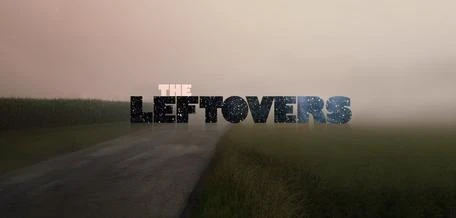
Maple Street is a residential thoroughfare within Mapleton, New Jersey, the fictional small town that serves as the primary setting of HBO's The Leftovers. It is the kind of quiet, tree-lined suburban road where front lawns are mowed to the same height and neighbors nod from their driveways—the ordinary American backdrop against which the show's extraordinary grief unfolds. In the wake of the Rapture, when roughly two percent of the world's population vanished in a single instant, Maple Street became a microcosm of Mapleton's collective trauma: empty houses, unanswered phones, and the slow, aching work of trying to live in a world that no longer makes sense.
While the show's major storylines orbit the church, the school, and the homes of its central families, Maple Street functions as the connective tissue of everyday Mapleton life. It is where the community's rituals of mourning, suspicion, and stubborn hope play out in the most unglamorous, intimate setting imaginable: a sidewalk, a mailbox, a porch light left on for someone who may never come home.
- Setting
- Mapleton, New Jersey (fictional)
- Type
- Residential suburban street
- Show
- The Leftovers (HBO, 2014–2017)
- Narrative context
- Post-Rapture community landscape
- Atmosphere
- Quiet, grieving, small-town suburban
Lore & Background
In The Leftovers, Mapleton is a town that has always been defined by its smallness and its interdependence. Maple Street embodies that identity: a place where the mail carrier knows every dog's name, where the hardware store owner remembers your mother's recipe for pie crust, and where a single empty house on the block can reshape an entire neighborhood's sense of safety. After the Rapture, that intimacy became a double-edged sword. The same closeness that made Mapleton feel like a family made the loss feel communal, inescapable, and—eventually—suffocating.
The street's significance in the show's world is less about a single dramatic event and more about the texture of aftermath. It is where the Guilty Remains' red-clad members might pass a house with a wreath still on the door three months later. It is where a father sits on a step in the blue hour, staring at a child's bicycle still parked by the garage, unable to move it. It is where the town's quiet, unspoken negotiations about faith, blame, and moving forward happen not in sermons but in the small gestures of daily life: a casserole left on a porch, a lawn that no one mows, a streetlight that hums over an empty driveway.
Maple Street, like Mapleton itself, resists the idea that grief has a clean shape. It is not a place of spectacle. It is a place of repetition—the same walk to the mailbox, the same glance at the same empty window, the same Tuesday morning that is supposed to feel like every other Tuesday morning but never does.
In Their Own Story
The October light comes in low and amber, catching the edge of a white picket fence and throwing long shadows across the cracked asphalt. A single oak tree marks the corner where Maple meets the main road, its leaves just starting to turn. The house at number 412 has a wreath on the door, the ribbon frayed, the flowers long dried to the color of old tea. No one has taken it down. The mailbox is full—bills, a catalog, a birthday card for someone who is not coming to open it. A neighbor's dog trots past, tail wagging, indifferent to the silence. On the porch, a rocking chair sits slightly askew, as though someone stood up in a hurry and never sat back down. The street is quiet the way a held breath is quiet: not peaceful, just waiting. Somewhere down the block, a screen door bangs shut. Then nothing. The light keeps falling. The chair keeps rocking, just barely, in a wind no one else can feel.
Reader's Guide
Maple Street is a residential street in Mapleton, New Jersey, the fictional town at the heart of The Leftovers. It is not a destination in the way the church or the school is; rather, it is the connective landscape of the show's world, the ordinary ground on which extraordinary loss takes root.
Its role in the story is atmospheric and symbolic. Maple Street represents the domestic scale of the Rapture's aftermath: not the global catastrophe, but the Tuesday-morning silence of a kitchen where no one is coming home for dinner. It is where the community's grief is lived in small, repeatable gestures—watering a neighbor's plants, mowing a lawn that feels pointless, leaving a light on.
For the viewer, Maple Street matters because it grounds the show's metaphysical questions in a specific, tactile place. The show is about faith, disappearance, and the stories we tell to survive. Maple Street is where those stories are whispered, where the red of the Guilty Remains' jackets looks almost normal against a row of beige siding, and where the most devastating line of dialogue is the one no one says aloud. It is the street that asks, quietly, what a town does when the world ends and the mail still has to be collected.
Did You Know?
- The Leftovers is set in the fictional town of Mapleton, New Jersey, and its suburban streets like Maple Street are designed to feel deliberately unremarkable—the horror of the show comes from what happens to ordinary pla
- The show's central event, the Rapture, is depicted as a sudden, unexplained vanishing of roughly two percent of the world's population, and its impact on a small-town street is one of the show's most emotionally grounded
- The Guilty Remains, the show's central grief-support group, are recognizable by their red clothing, and their presence in otherwise quiet suburban settings like Maple Street creates a recurring visual tension between the
- The Leftovers was created by Damon Lindelof and was noted for its deliberate, slow-burn pacing, using the domestic geography of Mapleton—its streets, porches, and kitchens—as a primary narrative space rather than relying
More in World & Setting
Elsewhere in the The Leftovers universe
Spotted an error? Know more?
This is a living reference — every entry is fact-audited, and reader corrections feed straight into our audit queue. Suggest an edit · See this site's audit record