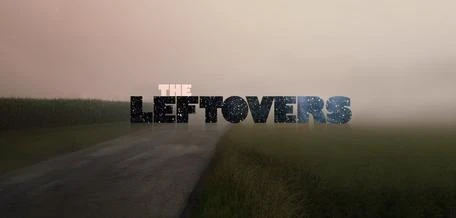
The Diner on Maple Street
Where the coffee is always hot and the silence after the Rapture is always loud.

The Diner on Maple Street is a small-town eatery nestled in the Mapleton, New Jersey community that serves as the emotional and geographic heart of The Leftovers. In a world where 2% of the global population vanished without explanation one ordinary Tuesday, this kind of unremarkable, fluorescent-lit, coffee-stained local spot becomes something almost sacred—a place where the living still sit down, order eggs, and pretend the world is the same one they walked into that morning.
It functions as a community anchor in the show's tapestry of grief and ritual: a place where neighbors cross paths, where awkward silences are broken by the clatter of plates, and where the weight of what was lost is temporarily set aside in favor of a bottomless cup of coffee. It is not a grand stage or a dramatic set piece; its power lies in its ordinariness, which is precisely what makes the absence that defines The Leftovers so devastating.
- Type
- Small-town diner / local eatery
- Setting
- Mapleton, New Jersey
- Narrative role
- Community gathering place; a site of everyday normalcy amid collective trauma
- Tone
- Quiet, grounded, emotionally resonant
Lore & Background
In the world of The Leftovers, the Rapture did not arrive with trumpets or a sky splitting open. It happened on a Tuesday, in parking lots and kitchens and school hallways, and the world simply continued. Places like the diner on Maple Street became the first sites where the remaining community reassembled itself—where mothers with empty chairs at the table still ordered a second plate out of habit, where the regulars who stayed kept their usual seats as if nothing had changed. The diner's significance is not in any single dramatic event but in the accumulation of small, aching moments: a waitress who still remembers everyone's order, a booth where two people sit across from each other trying to explain why they are still here, the particular quality of fluorescent light making everything look a little too real.
The Leftovers is, at its core, a story about how ordinary spaces become sites of extraordinary grief. The diner embodies this. It is where the living perform the small rituals of continuity—breakfast, small talk, the ritual of paying the tab—while the larger question of meaning presses in from every direction. It stands in quiet contrast to the more theatrical spaces of the show, the grand gestures of faith and denial, reminding the audience that for most people, survival looks like getting through another Tuesday.
The diner also serves as a kind of communal witness. In a town where everyone has lost someone and no one can say the same thing twice without it sounding different, the diner is where stories are told, retold, and gently corrected. It is the town's living room, its confessional, its waiting room for a future no one can quite name.
In Their Own Story
The coffee was already cold by the time she sat down, which was the point. She always ordered it hot, let it sit, and drank it lukewarm because the heat made her think about all the things that used to be warm and were not anymore. The waitress, who had worked the counter long enough to know every regular's grief by the way they stirred their sugar, set the mug down without a word. Outside, the parking lot was half-empty. A Tuesday. The kind of Tuesday that used to mean nothing. Now it meant everything, and nothing, and the particular Tuesday when the chairs in the back booth went empty and no one came back to fill them. She tore a roll in half. Ate one half. Set the other down. The diner hummed its low, fluorescent hum, and the world, for one more morning, held still.
Reader's Guide
The Diner on Maple Street is a small-town eatery in Mapleton, New Jersey, the primary community setting of The Leftovers. It is not a dramatic location in the way a church or a government building might be; its importance is entirely emotional and social. It is where the town's daily life persists, where the rituals of eating together and talking and not talking continue even after the world has been fundamentally, irrevocably changed.
In the narrative, the diner functions as a grounding space. The Leftovers is a show that deals with enormous questions—faith, loss, the nature of reality, the meaning of survival—and the diner is where those questions are set down, briefly, in favor of a plate of pancakes. It is the counterweight to the show's more intense, confrontational settings. Characters who have just been through something unbearable can sit in a vinyl booth, order coffee, and be, for a few minutes, just a person who is hungry.
Why it matters: The Leftovers is ultimately about how ordinary life continues in the shadow of an extraordinary event. The diner is the physical embodiment of that continuation. It is where the community reassembles, where grief is shared in small, manageable portions, and where the simple act of sitting down to breakfast becomes an act of quiet, stubborn defiance against the void. For fans of the show, the diner represents the emotional register they love most: the quiet, the specific, the deeply human.
Did You Know?
- The Leftovers is set primarily in the fictional town of Mapleton, New Jersey, and its small-town locations—including diners, schools, and neighborhood streets—serve as the emotional architecture of the series.
- The show's central event, the Rapture, is depicted as happening on an ordinary Tuesday, making the mundane, unremarkable spaces of daily life—like a local diner—carry enormous symbolic weight.
- The Guilty Remnant, the show's most iconic group, is defined by its rejection of material comfort and language, making the continued use of ordinary spaces like diners by the 'leftovers' a quiet statement of choosing to
- The Leftovers was created by Damon Lindelof and based on Tom Perrotta's 2006 novel of the same name, and the show's small-town New Jersey setting is central to its identity and tone.
More in World & Setting
Elsewhere in the The Leftovers universe
Spotted an error? Know more?
This is a living reference — every entry is fact-audited, and reader corrections feed straight into our audit queue. Suggest an edit · See this site's audit record